Many people are familiar with the Skagit Valley in spring as the tulip capital. Fewer people know that when winter comes, it transforms into a vital hub of the Pacific Flyway in winter. Millions of birds traveling from as far as Siberia and Alaska and use the fertile Skagit farmland as a rest stop. With 100,000 acres of protected estuaries and working farmlands, it offers a rare chance to see nature’s grandest spectacles right here in Washington.
Why the Skagit is Special
The Skagit River Delta is globally recognized for its ecological importance. It has been identified as an Important Bird Area by the National Audubon Society and is a member of the Western Hemisphere Shorebird Reserve Network (WHSRN). This means the area is a critical survival point for over 260 species of birds.
The Winter “Showstoppers”
The Skagit area hosts the largest winter gathering of Snow Geese and Trumpeter Swans in North America between December and March.
- Snow Geese: Look for “white blankets” in the fields. Over 50,000 of these boisterous birds migrate from Wrangel Island, Russia. When they take flight at once, it’s known as the “Ballet of the Skagit.”
- Trumpeter & Tundra Swans: 7,000 trumpeter swans (the largest waterfowl in North America). The valley hosts one of the largest wintering populations in the lower 48 states.
- Raptors: From Bald Eagles and Red-tailed Hawks to the elusive short-eared owls, the valley is a world-class destination for birds of prey.
- Shorebirds: Watch for massive “smoke clouds” of Dunlin, thousands of small birds flying in tight, shimmering formations to evade hawks.
- Waterfowl: Northern Pintail, Green Wing Teal, etc.
Top Birding Hotspots
There are 20+ hotspots that are perfect for both novice and experienced birders, with opportunities to see a wide range of species.
Birders benefit from the large tracts of land set aside for wildlife habitat and recreational use by the Washington Department of Fish & Wildlife. WDWF’s Skagit Wildlife Area contains 21 management units - Johnson/DeBay’s Slough Unit, Fir Island Farm Reserve, Island Unit (available by boat only), Leque Island Unit, Samish Unit, Skagit Bay Estuary Unit, Skagit Headquarters Unit and The Telegraph Slough Unit. It is also a favorite hiking area
1. Fir Island: The Heart of the Delta
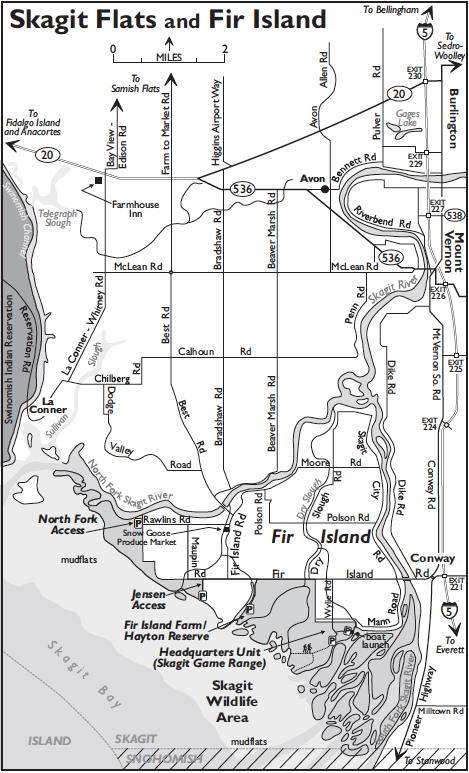
Credit: A Birder’s Guide to Washington by Bob Kuntz
Peak season here is October through March. It can be windy and open, so dress in layers!
- Fir Island Farm Reserve (Hayton): A 225-acre non-hunting refuge with agricultural and restored intertidal estuary. An elevated dike provides 360-degree views of Snow Geese and Trumpeter Swans feeding in the fields and intertidal marshes.
- Wiley Slough (Skagit Headquarters): A restored 156-acre estuary with multiple channels featuring wheelchair-accessible trails and a duck blind. It’s a great spot for herons, raptors, and resident eagles often perched in the snags near the blind.
- North Fork Access: A favorite haunt for Short-eared Owls and Northern Harriers as they hunt low over the grass at dusk.
2. Samish Flats: The Raptor Capital
This area is the most famous and reliable spot for raptors, including the beautiful short-eared owls, bald eagles, rough-legged hawks, and northern harriers.
Scan utility poles and fence posts as raptors use them as lookout towers. And be sure to drive safely!
- High Tide Viewing: When the tide comes in, ducks and shorebirds move inland to feed in the flooded fields, followed closely by the raptors that hunt them.
- Local Treat: After a cold day gazing at the fields intensively, I usually drop by Breadfarm in Edison to refuel. I highly recommend their seasonal pastries, baguette and hazelnut expresso shortbread!
3. Padilla Bay: The Eelgrass Meadows
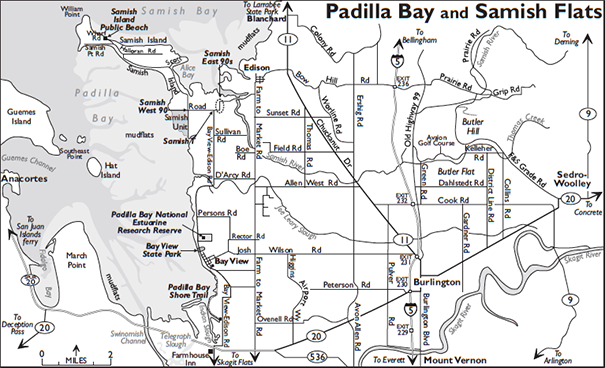
Credit: A Birder’s Guide to Washington by Bob Kuntz
Padilla Bay is a National Estuarine Research Reserve and contains some of the most extensive eelgrass beds (8,000 acres) on the West Coast.
- The Brant Connection: This bay is the primary wintering area for the Brant (a small sea goose) due to the eelgrass beds. Almost the entire global population of the Western High Arctic subspecies winters here.
- Observation: Because the bay is so shallow, the low tide exposes miles of mudflats, creating a massive buffet for nearly 20,000 shorebirds.
You can in fact extend your visit by camping in the neighboring Bay View State Park and hike the short trails to get more acquainted to the area.
4. Anacortes & Fidalgo Island: Coastal Wonders
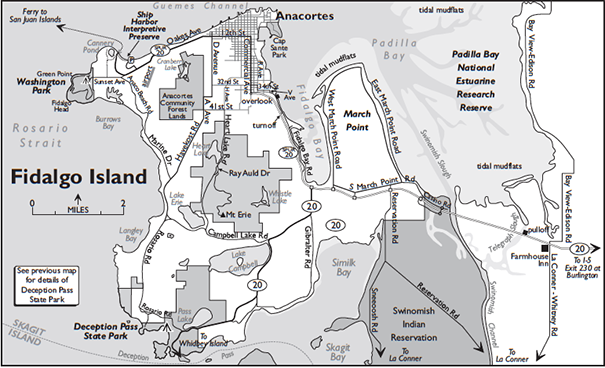
Credit: A Birder’s Guide to Washington by Bob Kuntz
If you want to see seabirds and forest species in one go, head toward Anacortes:
- Washington Park: A beautiful loop drive along the shoreline. Look for Loons, Murres, Oystercatchers, and Harlequin Ducks in the saltwater, and woodpeckers in the inland wooded trails.
- Lake Campbell: Check the boat launch area. In early spring, you might see a “convocation” of eagles. During a recent (early March) Skagit Audubon field trip, we spotted 8 or more soaring together over Mt. Erie.
- Deception Pass State Park: Visit Rosario Head and Bowman Bay for excellent views of alcids (the “penguins of the north”), grebes, and cormorants. A scope would be extremely helpful here as we are gazing into the far horizon. A windbreaker is also essential in Rosario Head since it is very windy.
5. Skagit River: The Eagle Gathering
Along the river near Rockport and Marblemount, winter brings hundreds of Bald Eagles to feast on spawning salmon. Visit the Skagit River Interpretive Center in Rockport for guided walks and educational displays.
Conservation Makes This Possible
As you watch an eagle dive or a thousand geese graze, remember that you are witnessing an intricate, centuries-old web of life. One where salmon feed the eagles and eelgrass sustains the travelers. The survival of these birds is tied directly to the health of our local environment. Behind the scenes, lots of civilian and government partners are dedicated to protect and restore the natural ecosystems that make these winter spectacles possible.
Before you head home, consider one small action to keep the Skagit thriving: practice “Be Bird Wise” ethics, log your sightings on eBird to help conservation scientists, or simply share the wonder of what you saw with a friend. Every mindful visit is an investment in the biological diversity that makes this valley a treasure for us all.
Tips for a Great Trip
- Parking: A Washington State Discover Pass is required for parking at all WDFW (Fish & Wildlife) spots.
- Gear: Bring binoculars, a spotting scope if you have one, and a field guide (or the Merlin Bird ID app).
- Safety & Ethics: Always pull completely off the road. These are “working lands”. Farmers need to move large equipment through these roads.
- Be Bird Wise: Respect private property and the birds themselves. If a flock of geese takes flight because you walked toward them, you are too close. Forcing birds to fly wastes the energy they need to survive the winter. As they say in the Skagit: “Let the birds do their bird thing, and let the farmers farm.”
- Resources: Skagit Audubon Society contains a wealth of information on local birding tips, conservation efforts, and offer guide walks and programs.