When: 2026-1-17 Saturday, 7:00AM
Where: Barney Lake Conservation Area, ~4 miles northeast of Mount Vernon
Weather: 32F and sunny
Tim Manns, Skagit Audubon Society Conservation Chair and Secretary of Skagit Land Trust, discusses the background of preserving Barney Lake for the swans. Credit: Skagit Land Trust Youtube channelBackground
The event, called Swanrise, was to provide scheduled public access to the Barney Lake Conservation Area when the trumpeter swan are most active here. Trumpeter swans are the largest waterfowl in North America. After breeding in remote areas of Alaska and northwestern Canada, they fly south to spend winter. Skagit County hosts more wintering trumpeter swans than anywhere else in the U.S. These swans spend their night in safe places like Barney Lake, and leave in the morning to feed on Skagit farmlands.
Skagit Land Trust owns Barney Lake, which protects 376 acres of ecologically rich wetlands, wildlife habitat, and open space near a growing community. It provides habitat for waterfowl (trumpeter swans, ducks), bald eagles, great blue herons, and supports salmon in Nookachamps Creek.
Protection has happened in stages over nearly 30 years through land acquisition, stewardship, and partnerships. Over the years, thousands of trees and shrubs were planted to restore forested wetland habitat, and a creek was re‑meandered to improve salmon habitat. The Land Trust has a long-term vision of ensuring the lake and surrounding lands remain healthy for wildlife and people over the next decades.
managing such a long-term project requires lots of relationship building, rapport and outreach. Credit: Skagit Land Trust Youtube channelBarney Lake Conservation Area is also used for education & youth engagement, via its Conservation Classrooms program for field‑based learning, stewardship projects, and hands‑on ecology education with local schools.
The trip
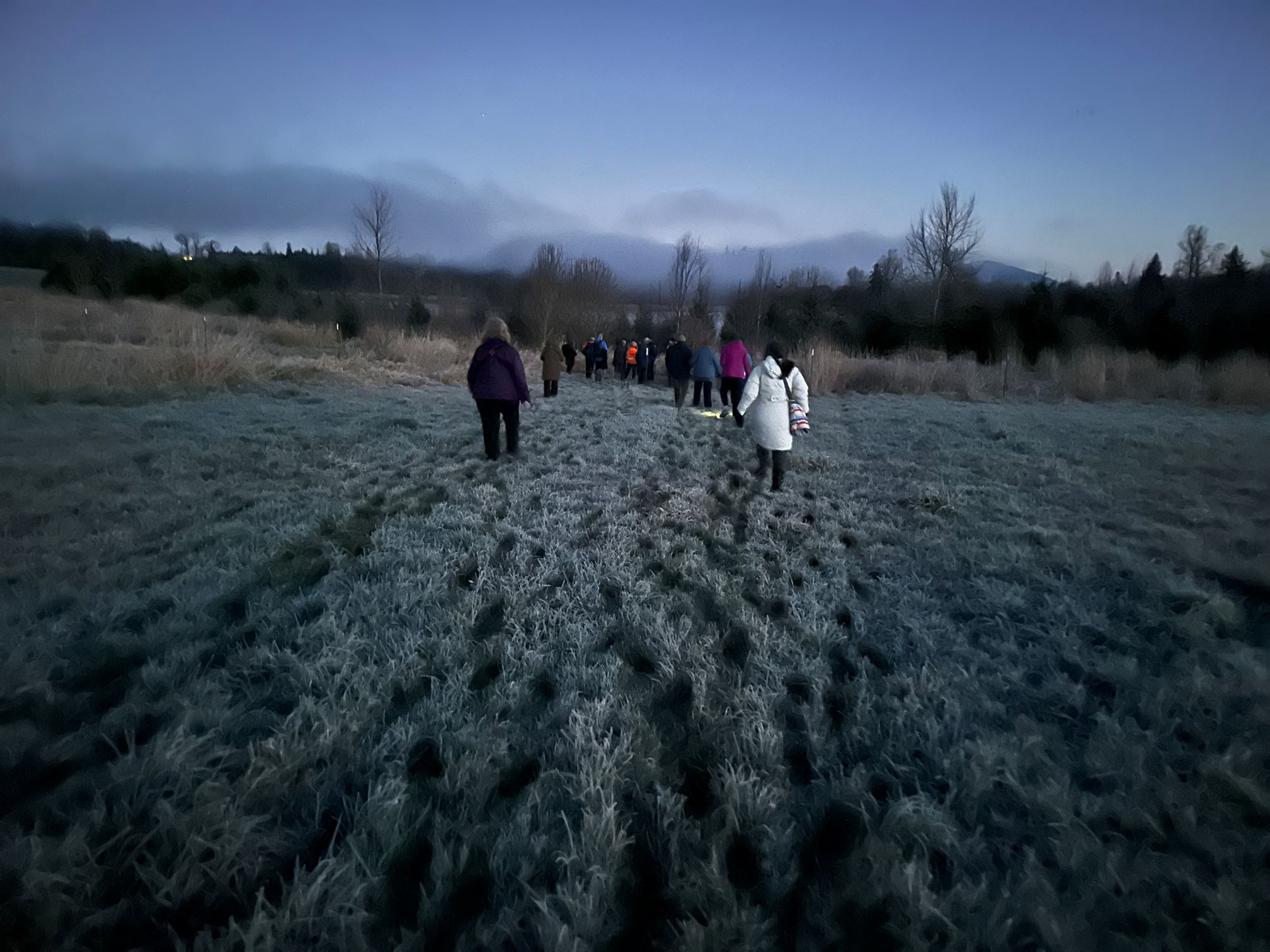
We gathered at the gate outside the defunct farm at 7am, when it was still dark. Upon getting off the car, we already heard the deep and low trumpets sounding all around. After our trip leader Barry and Conservation Chair Tim gave us an overview of the area and things to watch out for, we walked through the property as a group and traversed the still-frozen meadow to the lakeside.
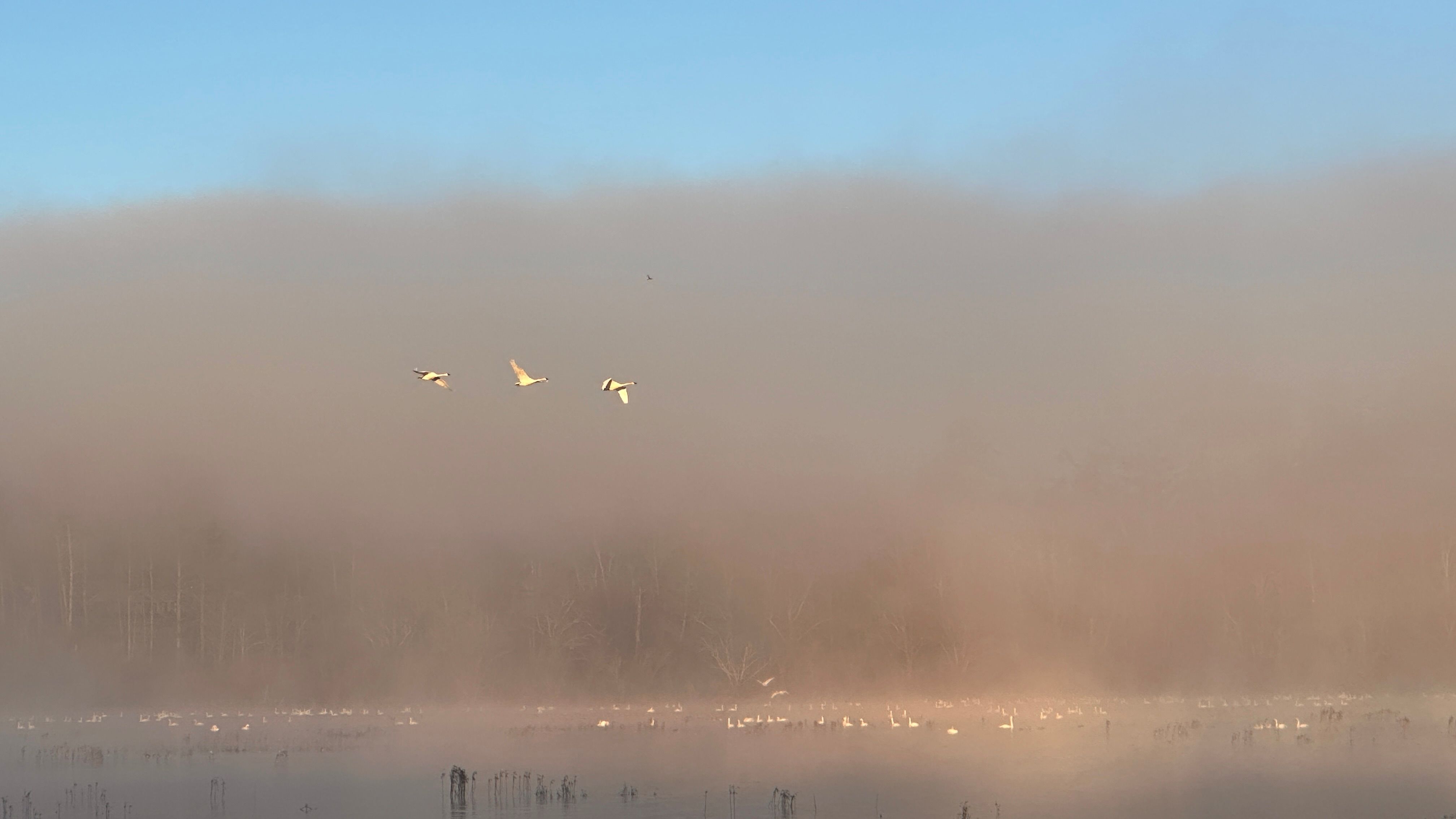
Light gradually broke out and we were granted front row seats to a foggy lake painted in soft pastel. Lots of swans were preparing for their morning flight west to the Skagit farmlands to feed on leftover corn, potatoes and grains, and spend the day in warmth.
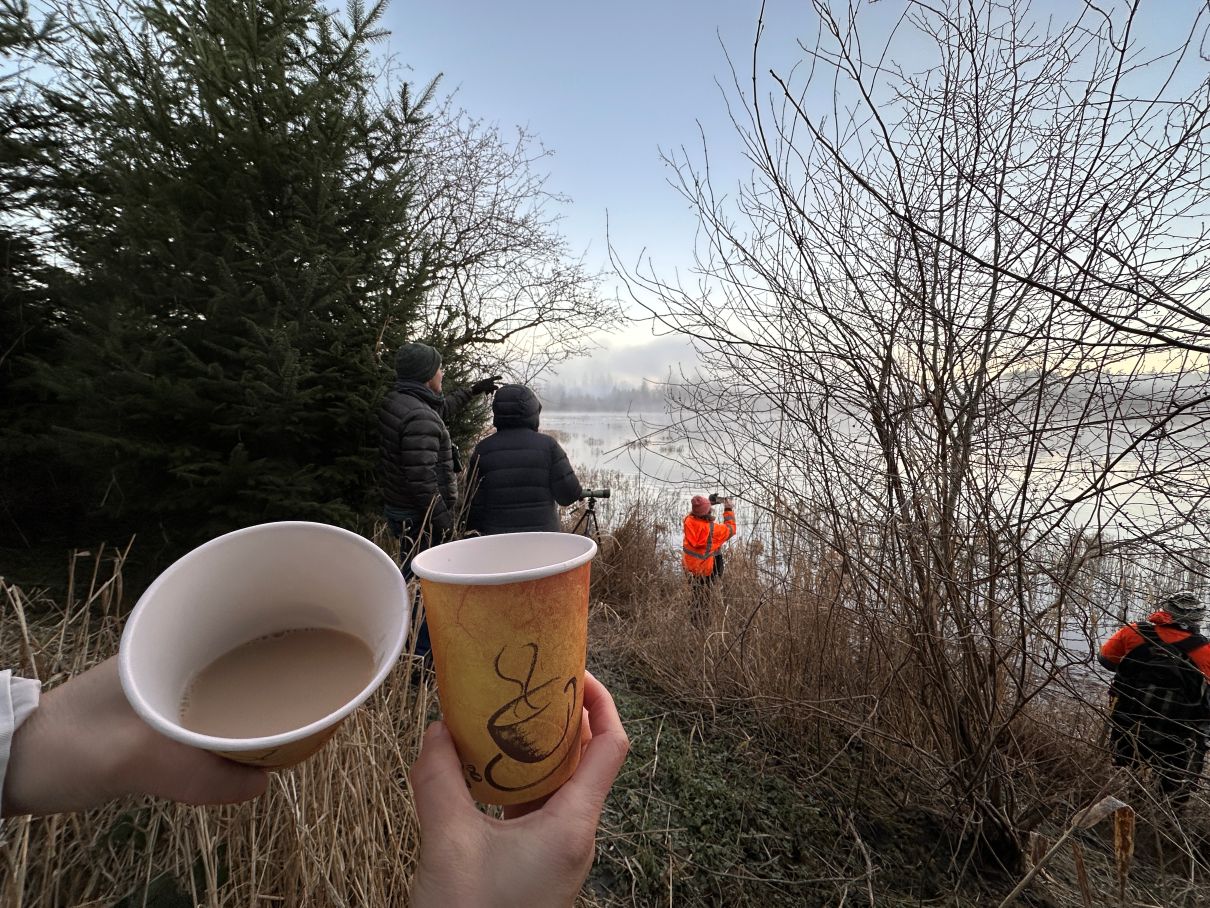
Our trip leader Barry was so kind to prepare hot earl-grey milk tea to warm us up, both physical and in spirit. Even with thick rubber boots, we were still standing in frigid frozen mud for a few hours to witness this magnificent show from nature.
The swan action was so stunning that we felt oblivious of all the other avian friends next to us, the usual marsh candidates (you could hear them in the videos) - red-wing blackbirds making its signature call, lots of chickadees. And of course the ducks mingling with the swans in the water!
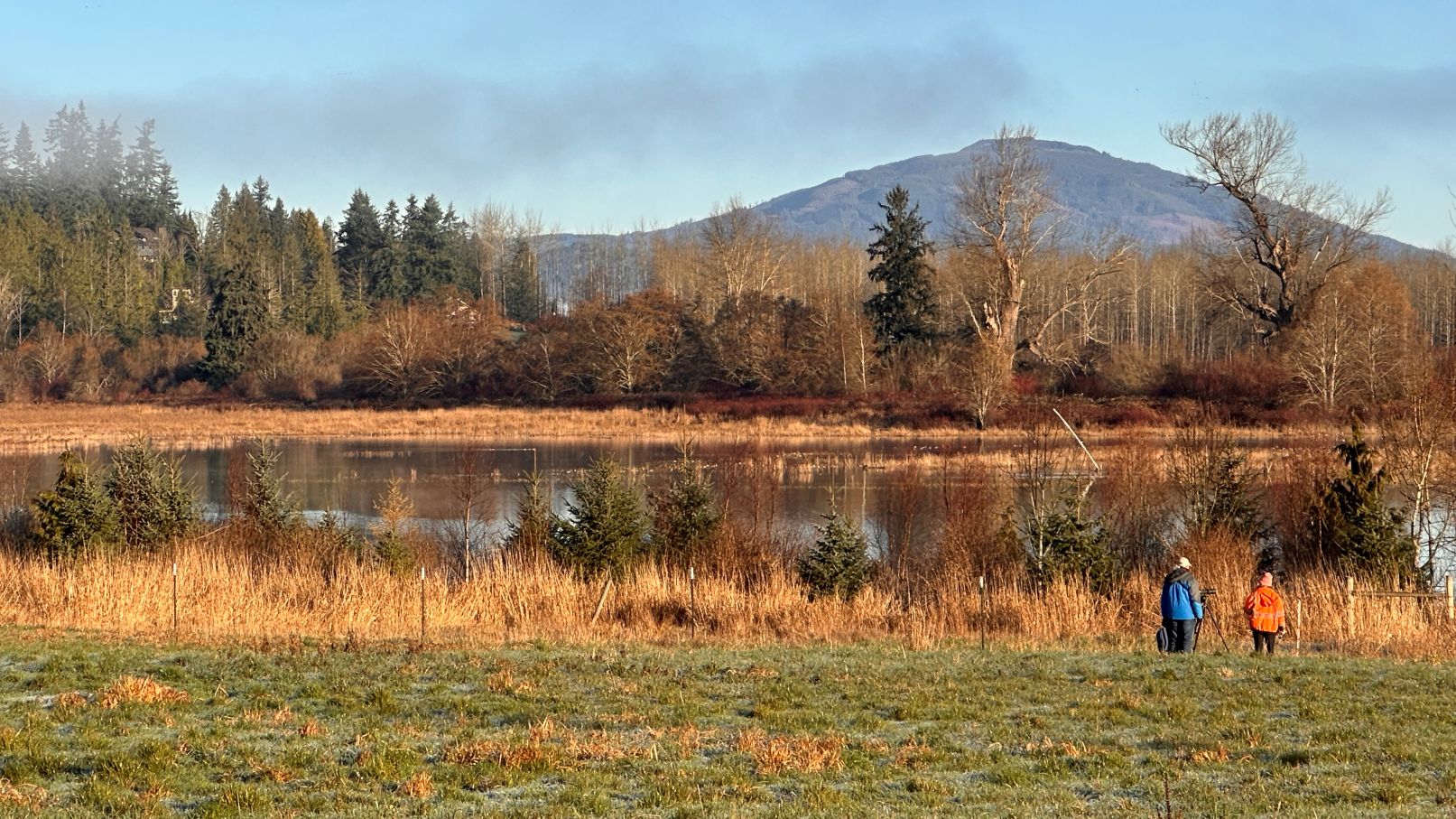
As the air traffic thinned out, we disgrouped and left the property at 10am. The scenary was totally different than when we arrived.
Also nearby….
The trip concludes at 10am as most of the swans have taken off to the Skagit area for daytime feeding. This left plenty of time to explore the surrounding area.
This time I headed to the Skagit Wildlife Area: Fir Island Farm Reserve (aka Hayton Reserve) to wait for the elusive short-eared owl, which is usually active near dusk.
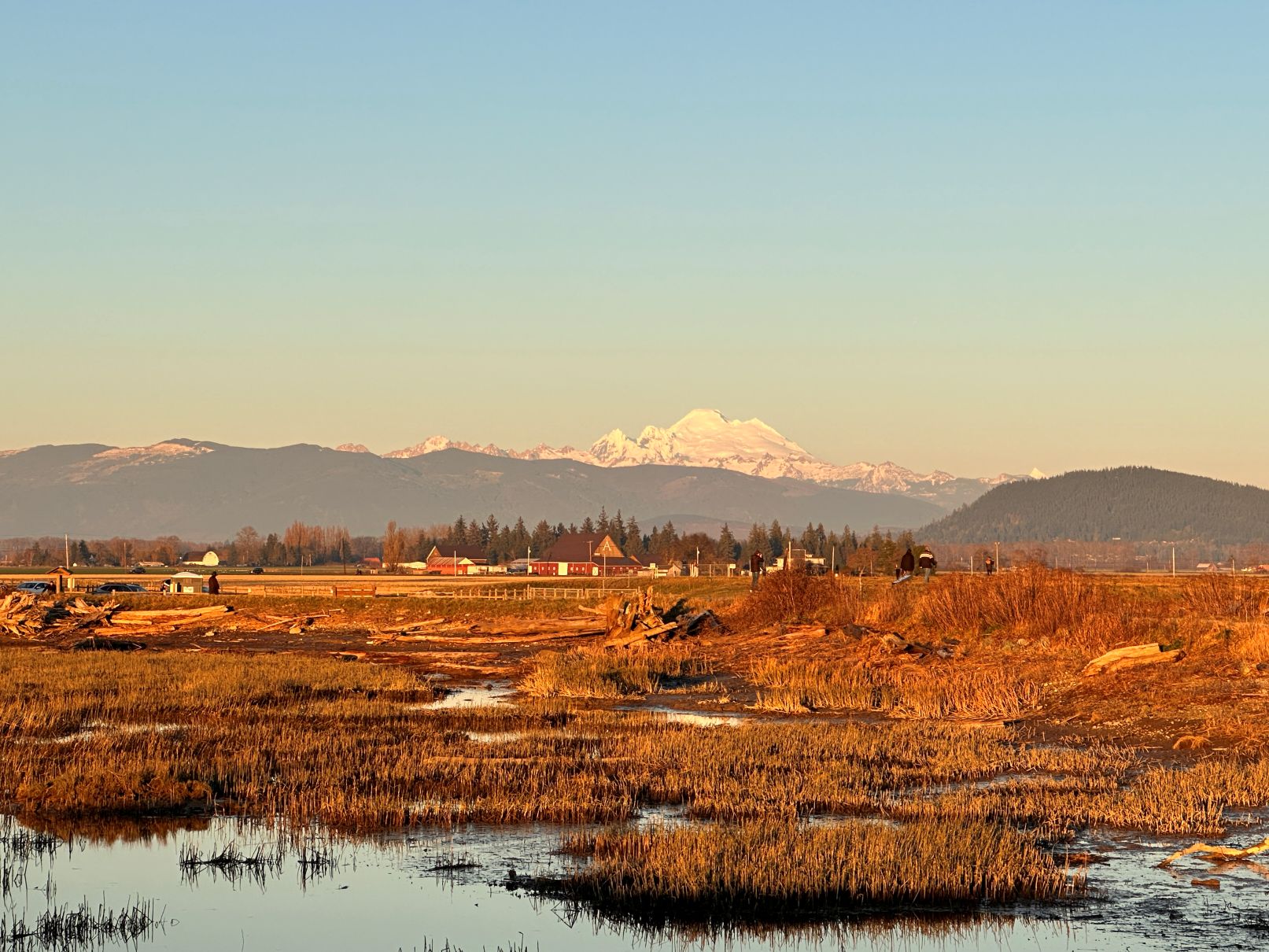
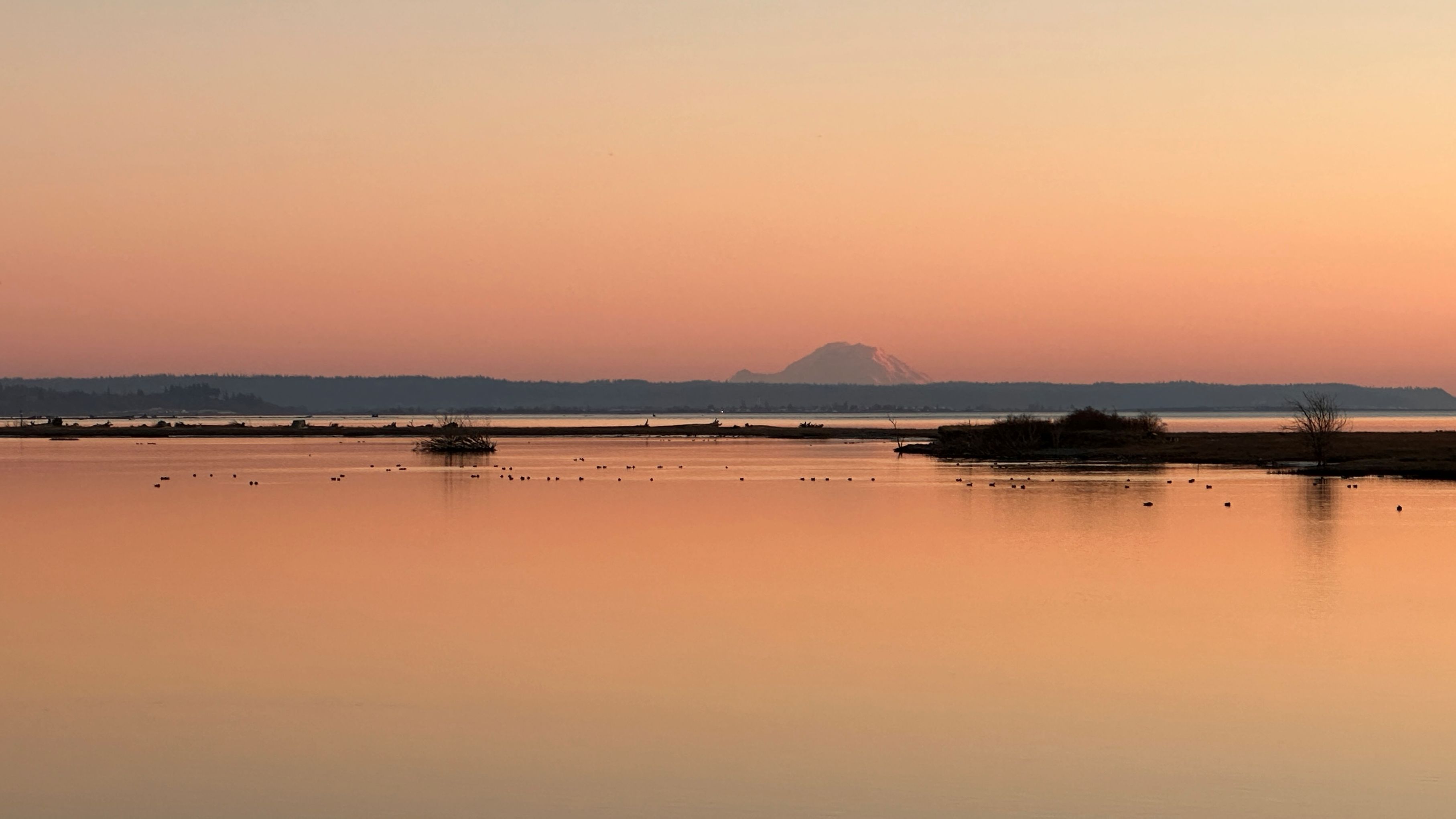
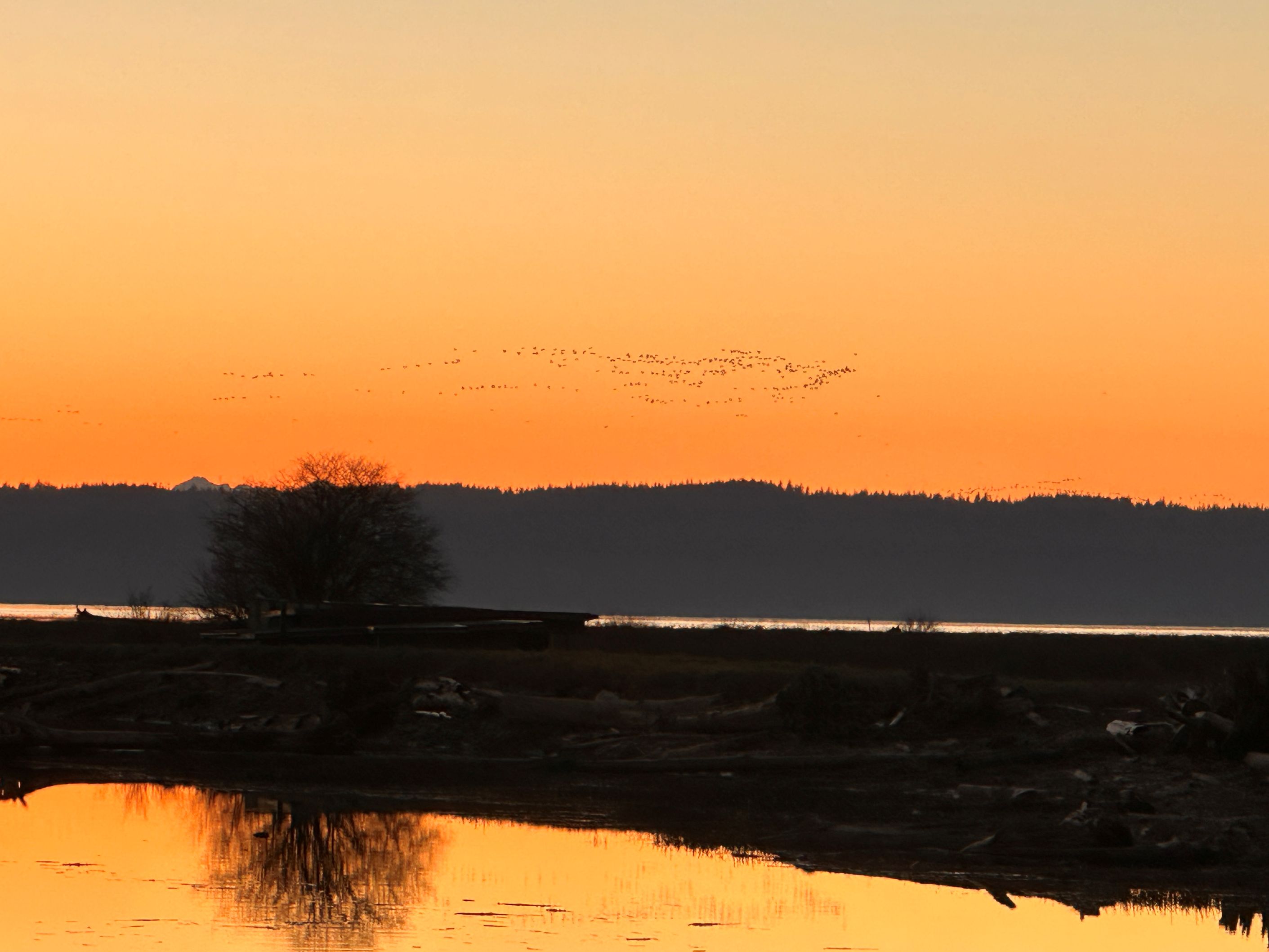
Fir Island Farm is a restored intertidal estuary, and is a haven for both birds and photographers. A short trail along the dike offers an open view for the sea and mountains in 360 degrees, accentuated by a diverse mix of wildlife species in the front stage.
After patiently waiting for an hour, we did see the short-eared owl (with its usual rival the Northern Harrier) flying in and out of the field north of the parking. A belted kingfisher also joined in the fun.
When we left Fir Island Farm by the access road, the owl and harrier suddenly made a pass across the road to the field east. Watch out and don’t skip the last chance of seeing them when you are leaving!
Afterthoughts
As I venture more into nature and learn about how each living thing interacts with one another in intricate ways, I gain a deeper sense of appreciation for those who vow for strong stewardship of the land. Having been a project/program manager in a for-profit enterprise by profession, I could imagine the tremendous effort and fine balance such public projects demand for success. In some ways, it is both art and science.
For example, trumpeter swans staged a remarkable recovery from extinction thanks to the relentless work from many people who see the land’s importance with a far horizon.
Likewise, the Fir Island Farm Reserve we nature lovers enjoy so much isn’t born out of nowhere. It takes careful planning, meticulous coordination with many stakeholders of conflicting interests, and a shared deep passion for the whole ecosystem and community health to make it happen.
As we get back to our car and drive away from the reserves by the end of the day, I think each of us can reflect on how we can also play a part (even small) in conserving this fragile space to support the wellbeing of all visible and invisible living beings, in each everyday action we take.