When: 2026-3-6 Friday, 9AM
Where: Port Susan Bay, WA south of Stanwood
Weather: 50F with light drizzle and light breeze, receding tide
eBird checklist: by trip leader Jeff Osmundson
Background
the motivation behind the whole projectWe met Jason Griffith, Environmental Program Manager of the Stillaguamish Tribe, on the just-completed new dike along Hat Slough at the mouth of the Stillaguamish River, east of the Nature Conservacy Preserve. Jason was invited by Skagit Audubon chapter to discuss the background, process and result of Phase 2 of the Stillaguamish Tribe’s zis a ba estuary restoration project.
The project is part of a broader multi-phase effort by the Stillaguamish Tribe and partners, and with similar goal as the Leque Island Restoration and Nature Conservacy project in 2012, to restore habitat for juvenile salmonids and other native species by increasing tidal exchange and freshwater distribution. This is essentially converting agricultural land (for cash crops such as alfalfa, grass for seed, and corn) into tidal marsh land that supports a diverse biotope of species.
Phase 2 construction, credit: ESAWe were given a tour of the new dike, which was just completed by the end of 2025. Jason went over the key actions: removing two miles of levees to restore natural tidal flow, excavation of new distributary and blind tidal channels to create intricate, fish-friendly habitat, and removal of old agricultural infrastructure, including barns and debris.
The trip
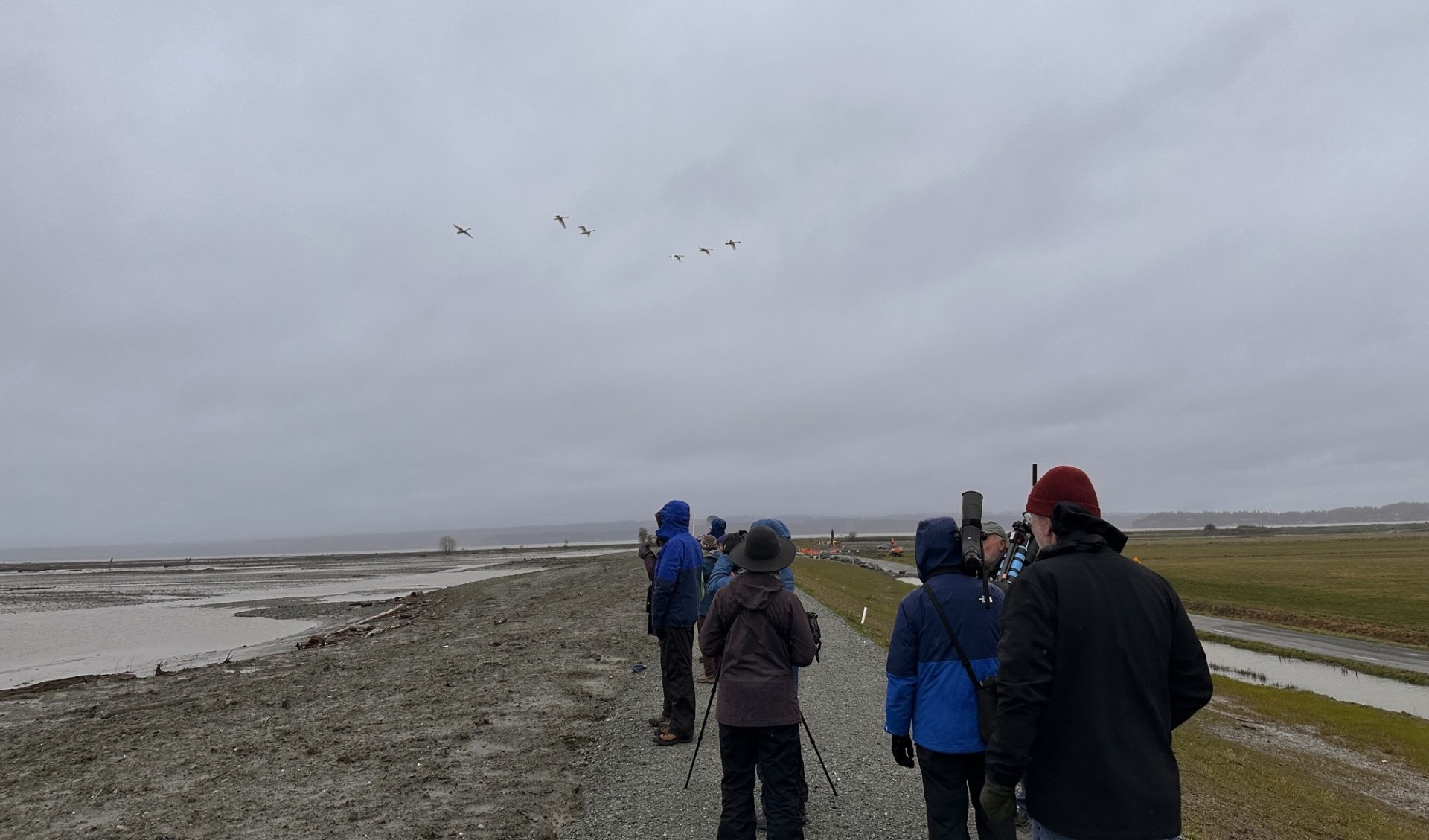 Our members enjoying the scenary on both sides of the dike, with busy trumpeter swan traffic above.
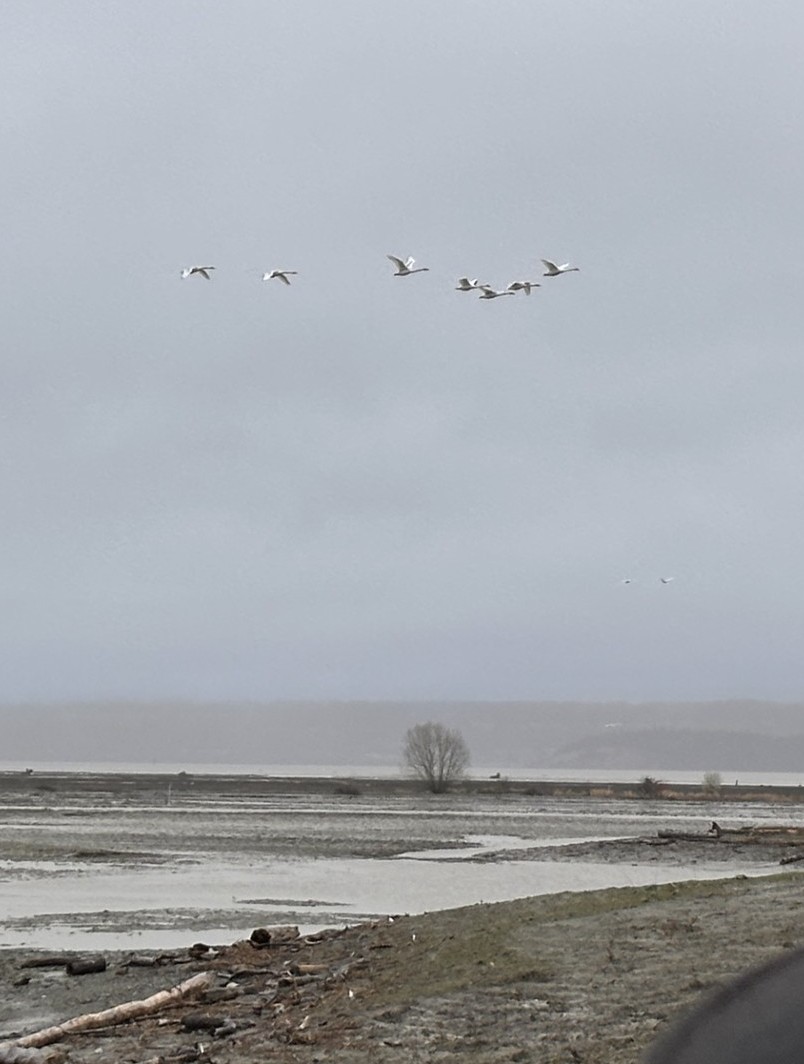
The new dike separates the newly created marsh channels with the existing argricultural land. Of particular interest (to me) was the frequent taking off (at least 1 group/5 min) of trumpeter swans towards the east and north from Port Susan Bay. This put us on the dike right below their route and offered me a great view of them flying directly over. I really felt like being in an air traffic control tower with a clear view of all these beautiful creatures soaring high and making turns, sometimes mistaking them with the once majestic Concorde! I also feel very grateful for my chapter leaders, those groups that joined force to work hard in conservation, as well as nature for granting me this precious experience of sharing time with these beautiful yet temporary visitors, before they move back north soon.
Since this is of wetland nature, we do see the usual shorebird suspects: plovers, yellowlegs, killdeers, dunlins and lots of gulls. The marsh favorite: blackbird is also plenty. On the agricultural side, we observed a northern harrier, bald eagle and great egret.
My fellow members also reported seeing a group of tree swallows (which might have just arrived to prep for their breeding season), but I was too slow to pull out my binoculars to take a closer look.
Also nearby….
Since I usually drive over an hour to the field trips, I often combine nearby hotspots in a single visit. This time, I toured the nearby farmland along Thomle Road and Norman Road.
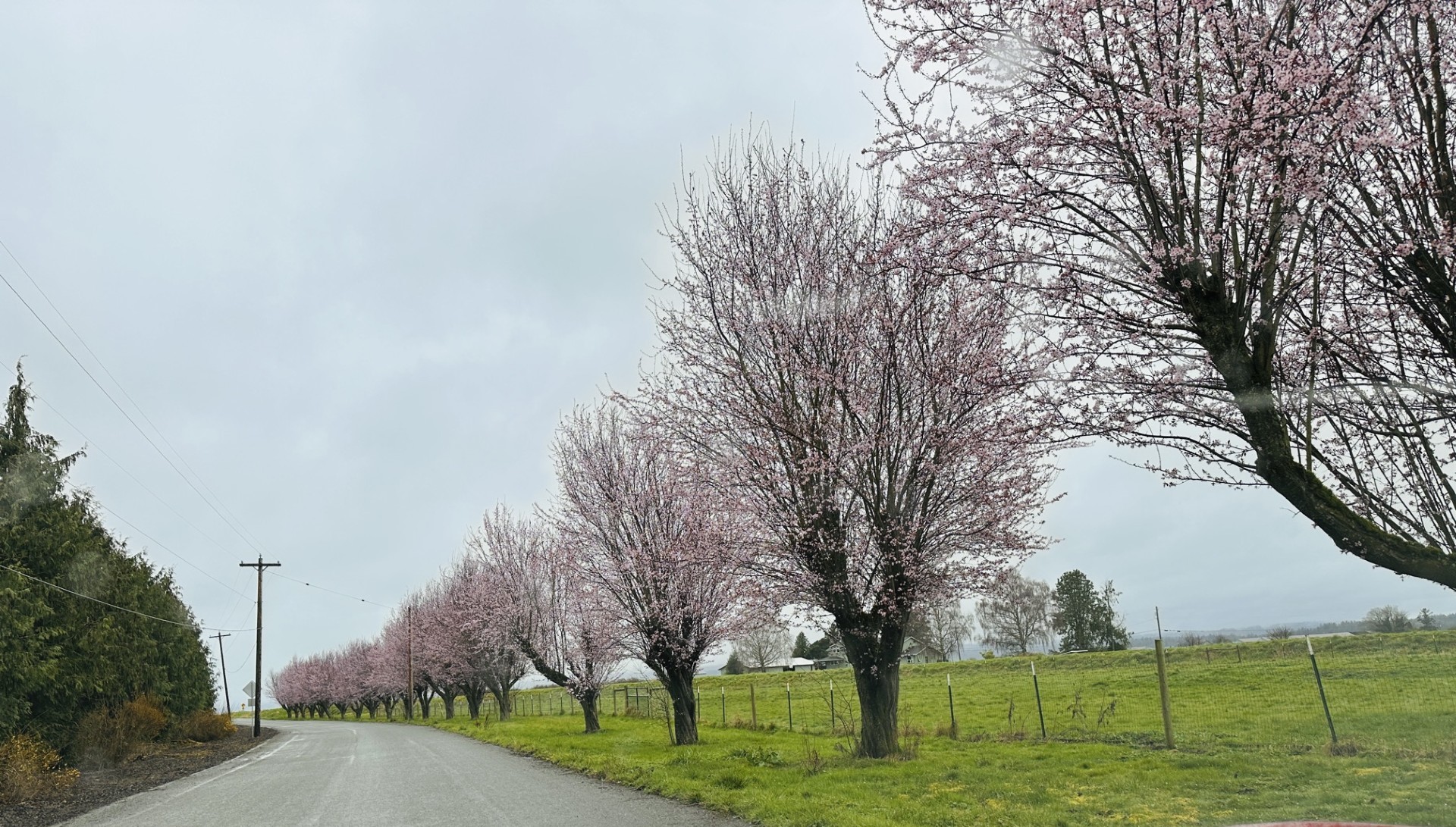
Beautiful spring blossom along Thomle Road. Eurasian collared doves on the tree right across from the dairy barn. Bald Eagles perched atop trees nearby.
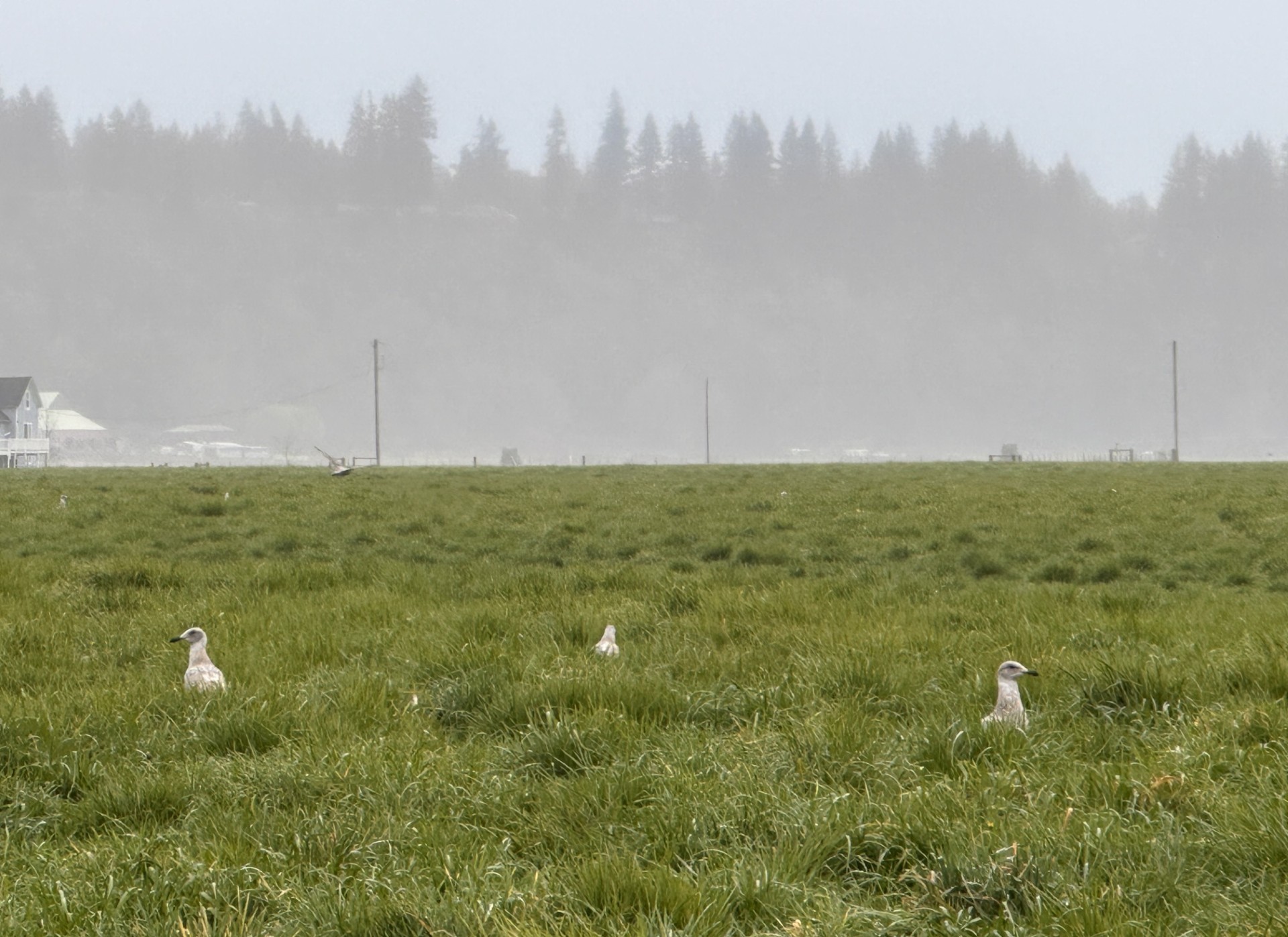
Lots of trumpeter swans on the fields along Norman Road. Lots of ducks in a pond among fields. Red tail hawk perched on top of a big tree. 3 meadowlarks with mallards in the field north of the intersection of Norman Road and Marine Drive. But what I find the most interesting are these gulls popping their head from the field like puppets!
Afterthoughts
I did some more reading back home and here’re the tidbits that I found most thought-provoking:
- More than 90 percent of Puget Sound’s tidal wetlands, which are essential for a variety of species, have been lost to development. Currently, similar restorations are happening, or have been completed in the surrounding area to reverse land use that decimated salmon run from 20,000/year to 26 in 2025. Per Jason Griffith, “There are no fishermen in the Stillaguamish Tribe that make their living on Stillaguamish salmon of any species. The tribe is really focused on building not only the culture, but also the economy around salmon that they used to have.”
- In the previous Nature Conservacy project in Port Susan Bay, even after removing the existing levees, it takes 80 years for nature to completely reclaim the land and return it to what it was when the tribe inhabited the land. Using data science and “adaptive management”, various partners worked to recreate channels to gently accelerate this acclimatization process so the juvenile fishes can rehabit faster. The results are still in the open.
- While the zis a ba II project is celebrated as a major ecological victory, frictions stem from the collision of two different worlds: a century-old agricultural heritage and a modern push for tribal sovereignty, cultural decolonization and a return to the tribe’s fishing heritage. Salmon remain essential to the culture, and the inability to harvest impacts the tribe’s way of life and traditional food. I think it is ironic that the tribe has to buy back land that their ancestors used to steward and depend upon for centuries. At the same time, generations of homestead families have invested sweat and money in tilling this land to subsist.
- the traditional mindset of floodplain = fertile soil for farming may be rightfully challenged in this modern era. When I was in elementary school, I was taught about the ancient civilizations who leveraged flooded soil along the Nile, Mesopotamia, Huanghe and the Ganges delta to farm and build up culture and wealth. With a combination of population growth in the area and rapid climate changes pushing everything to the edge, we might need to reexamine the status quo as we’re witnessing more natural disasters. Just look at the Nov 2025 floods reaching historical levels across western Washington, when several levees in the Puget Sound area were compromised, causing many people to be evacuated. I think more public discussions should be facilitated to raise awareness for more sustainable solutions, instead of just short term fix of where it aches.
- In some parts of the Puget Sound area, there has been complete disregard of the existence of floodplains by building modern industrial infrastructures (warehouses, factories) and human dwellings directly on top of them. Just look at the Nov 2005 floods in Auburn!