In the tradition of my annual reviews, here comes a recap of the things I experienced, highlighting 17 books I found memorable.
What an adventurous year as I dipped my toes in various new pursuits, and also had a fruitful output of new blog posts recording things I’ve learnt. This year I’ve continued to focus on several core areas (learning, psychology, Japan, lifestyle) while diving deeper into LLMs.
I started the year with a recap of what I learnt in Coursera in 2024, I then restarted classes in EDX, taking classes in different disciplines (public project PM, risk management, design, economy, robotics, etc.). I built on what I learnt to prototype new projects and blogged along the way. My tech focus for most of 2025 was in DevOps, LLM, information retrieval, benchmarking, and serving optimization.
When the weather started to warm up a bit in March, I immediately went back to nature to start hiking. Luckily I am blessed with proximity to the Cascades mountains with lots of forest/mountain trails within 1 hr of driving. When the air turned frigid, I switched to mushroom foraging and birding (along the migratory path). These both persists my outdoor activity level and ensure I intake enough fresh air!
Maker mindset
One day when I was checking out books in my library, I saw the new Makerspace next door. Why not trying something totally new to challenge my dexterity, I think. So I became a frequent attendant of my library’s workshops. Tried soldering, making my own amp, 3D printing and other craft work. It was in the Makerspace that I picked up David Lang’s book “Zero to Maker”. In true maker fashion, I didn’t read to become one, but came across it while tinkering something. I really aligned with the values Lang conveyed:. The can-do and fail-fast spirit, together with a growth and entrepreneurship mindset. This mindset also aligns with my Kinesthetic learning style, to learn by doing. Just like Phil Stutz said in True and False Magic - you learn much more in 15min of opening your donut shop than researching business plans and stuff for 6 months.
Here are my direct results
- my massively improved prototyping and GTM speed - with problem discovery and execution accelerated. Idea is nothing, prototype is everything
- Start small: thanks to Dr. Kawabata - 樺沢紫苑’s books, by learning to focus on small wins, the dopamine gain rolls me forward to the next small win, then gradually to the goal
- best way to counter perfectionism, as you are in a perpetual state of becoming
- I am always expanding the set of “what I know I don’t know” - that’s a proxy measure of my growth
This also affects how I approach learning using the JIT (just-in-time) way:
- find a project
- identify foundation blocks
- identify the required level
- curate resources at this level <- this take most time
- complete the project and blog about it
- connect this new block to my existing knowledge system
Tech
This book is extremely practical with lots of industrial best practices and insights from author’s own work and interviews with various practitioners. Like what the author promised, there is no code block, no introduction to tools, but everything she wrote is foundation blocks for learning how others build models (# of param, tokens to choose, the FLOPs needed), how you choose based on your need, how to balance, measure, fine tune, etc. I agree with her promise that this book will last long simply because it doesn’t ride the waves of tools but go back to the basics.
This aligns with my kihon, to always learn the first principles when going into a new field.
I wish there are more books like this that explain clearly both the design and rational of foundational blocks. Instead, a lot of publishers keep pumping out tech manuals of using x tool to implement y with toy datasets, without clear justification of why x is the right tool to solve the problem, or if y isn’t even a good solution to begin with. A lot of these books just demonstrate the coolest tool of the moment, and do something just for the sake of doing it, or just because the current tech can do it. It assumes you either know the foundation well or just want to polish your resume with the latest tools
Practical MLOps - Noah Gift/Alfredo Deza
This is a very interesting book, as both authors are very disciplined pro athletes when they are away from their machines. The MLOps knowledge are complemented (or justified) by a lot of life lessons they gained while training for sport competitions and managing their health. The other angle they share are rationales for business decisions they made in their jobs, which are much more valuable (and elusive) than tech how-tos. This is how this book distinguishes itself from the red sea of tech publications.
Hello Web Design - Tracy Osborn
This is an excellent book touching all the design foundations and easing you in with an arc along idea -> example -> shortcut (quick fix, resources).
I appreciate its approach of 80/20, that bootstrapping 80% of the most important thing so you become comfortable with an area to converse with the pros, making choices and doing more. She differentiates her approach from those whose goal is to train you into a practitioner, which begins with really in-depth foundation thing. She says this is not necessary as most people learn not to be experts but just enough to do a project or collaborate with others. By scoping our learning right, we can prioritize on the real most important thing.
In the first chapter, she already prioritizes the highest ROI in renovating something is to declutter (more whitespace, more lead between lines, reduce visual elements, following the F-pattern for people to scan content, shorten paragraphs to 2-3 sentences, use max of 2 typefaces, use fewer colors and reserve the pop colors for CTA or heading). It immediately cleans up the layout to give a more luxurious look.
Osborn also encourages the reader to find inspirations everyday, and analyze - what it is that you like - why does it work? - how can I copy it into my work? - what are the things you don’t like, why? <- make sure you don’t repeat it
Learning
In this book, the author mainly focused on meta-learning (reflecting on how one learns something). Many of the roadmaps are covered in other books, but one interesting tidbit is how to identify the foundation blocks of a new subject by finding 100 keywords in the domain to master. These keywords are like auto pilots to make you more alert of related info as they pop up. This is essentially leveraging selective attention to help us filter our input. The next stage will be to find 3-5 domain experts to ask questions, or if this is not possible, find 3-5 foundation books and thoroughly understand them.
The author, a pioneer in brain MRI imaging in Japan, explains that brain development (and memorization structure) goes through different peak phases as we age. Thus we cannot rely on the same learning methods we used in teens. By adapting to our brain development phases, we can maximize what each phase has to offer and continue to grow our brain as we age.
For example:
- teen: memorize well, memory area can act solo (e.g., can memorize without meaning, as audio is closely linked to hippocampus, so we remember what we heard in class). After this phase, it has to collaborate with understanding, thinking and emotion (only memorize when understood)
- after 30: This is when he observed the transcranial temporal pole growth at maximum, aiding in memory and comprehension. We begin to understand what we couldn’t before.
- 40s: parietotemmporal junction (PTJ) growth at maximum, assists in analyze, understanding audio/visual
- 50s: frontal association area (like CEO) growth at maximum, assists in execution/decision making. This will not deteriorate at 85 in healthy people, and will keep growing at a rate similar to youth
He also talks about how to improve memorizing by tricking the brain to treat a piece of info as both familiar (10minx12days trumps 2hr straight block) and important (keep writing and talking about it). Moreover, input with intended output will help understanding and memorizing. So before you start, prepare your mind that what you learn will be taught to others later today.
Lifestyle
Microseasons - Tiffany Francis-Baker
This book is very creative as it knits seasonal changes with real-life changes. As the year progresses, the book shines a light on self reflections that align with the season metaphorically. These are all mini exercises such as problems we can work on, as well as accomplishments to celebrate. It helps the reader harness natural energy to sail smoother in life.
This is a typical Joseph Campbell hero play, with a young, inexperienced protagonist leaving comfort zone into a unknown and frightening world (a luxurious London where she acted as a caretaker for her picky grandma) and facing daily challenges in new places. She unwillingly and unconsciously assumed a new persona of a personal assistant of a wealthy lady, overcoming each problem with help from her new mentors (butler, air hostess) who not only taught her the way of 1st-class living and hospitality, but worked alongside her. The final kick was in the airport lounge before returning home when her grandma gave her the ultimate lesson in confidence and living out her best. In the journey, she gradually learnt more about herself, the world and what she really cared about. When she returned to Japan, she was already transformed.
The Taiwanese recommendation and book covers all focus on “emotional blackmail” from elderlies and the challenges of dealing with them, misleading and disregarding all the transformations and important life lessons that you can gain from entering a new world, even for a short time. So I initially thought it would be quite negative, or mostly about tourist spots description. But it turns out to be very encouraging as it’s a memoir of the author’s youth when she learnt 2 very important things
- first class hospitality and customer-centric service (from airline cabin steward, and luxury hotel butler)
- how to live out her best by being truthful, confident and humble at the same time (from her demanding and high expectation grandma)
These 2 influential lessons have stayed with her for her whole life. It was like an eye opener. As she wrote the book in her late middle-age, she lamented that she was too young at that time and didn’t seize the opportunity to learn more - what is taste, how to pick what is good, how to trust yourself and show your true self to others.
I am pleasantly surprised by this book “Low Cost Living”. I thought it would be focusing on practical tips on minimalist living, more like Danshari, Konmari method or other Japanese minimalist lifestyle books. But in fact, the whole premise of this book is “self-awareness” - a mindset reset by refocusing on what fits me, what do I really like, what is the underlying problem I want to solve. Only when this is clear to become your anchor can you start any action. It’s more like a refocus, reorientation of life, mindset and values. By practicing self-reflection on “what do I really like” everyday in every choice to make, she regains control of her life.
The book walks through the author’s journey in finding her own compass.
It is not saving money for saving’s sake, but to choose to live and spend based on what one really likes. The first thing to do is to take the time to settle down, debug/trace the root cause and bring real changes. For her, it is to move out from stressful/unsuitable environments that depletes one’s mental reserve so she needs material reward to compensate. Do not use quick fix/thrills with easy convenient solutions (shopping, ndulging in something, or making drastic change) to mask the underlying desire/problem. These are often expensive and non-recoverable in the future. Too easy access to these fixes from the environment and our dispensable income are making us numb to real needs. Worst yet, people get addicted because of these short rush of dopamine rewards that fade quickly (dopamine mill) and didn’t actually resolve the underlying problem for needing this dopamine, so they need to consume a bigger share next time…..this keeps going on
This goes hand-in-hand with another motto: don’t force yourself (in anything like diet, work, LT goals, environment, etc.) - because it will bounce back and you will want to “reward” yourself. I think this is grounded in psychology: the more stress you create, the more energy is needed to sustain and you are pushed into tunnel vision (cognitive deprived). Always give yourself some ease and space so you can have/make better choices. Also when you are full (satisfied), you will not want to intake more. When you are not satisfied (with yourself), you will want to reward or compensate.
Matsuura Yataro 松浦弥太郎 is one of my most respected writers, and I wondered if this book “Live like an essayist” would be like Murakami’s “Living as a pro novelist”.
Matsuura labels himself as a lifelong essayist. This is central to his identity and career, and shapes his philosophy and character - someone who deeply observes, reflects, and shares the secret he found by writing consistently. It is not to chronicle life events but to share all his own insights, feelings and derived knowledge from daily reflection on things he encounter. To continue doing so, he vows to live a self-aware and observant life to enrich and motivate others.
Matsuura’s taste is developed through years of deep observation (input), reflection (ferment) and writing (output). He describes how he aspires to learn from those pro essayists who can share their discovered gems to instill hope and courage in others. I had the same thoughts while reading his book, as for me, he obviously has become the pros he aspired. I aspire I can keep working towards like him.
Japan
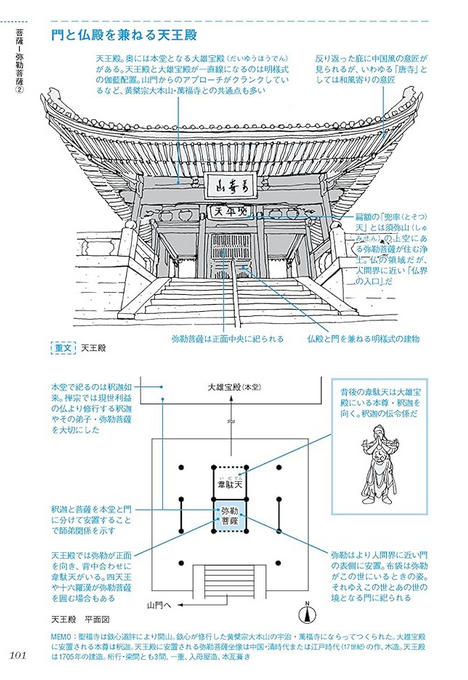
This richly illustrated work dissects buddhist temples in Japan to explain how ancient builders/craftsmen used their construction to convey Buddhism concepts in 3D format. It is very eye-opening as it’s the first book I’ve read that pieces together Buddhist ideas with how they manifest in architecture, all accompanied by lots of diagrams. I wish there are more architecture books that shine a light on how each component in the whole system contributes to the intent of the designer. This sure makes appreciating designs and artworks more insightful.
I have long aspired to read Shirasu’s writings due to her multi-faceted cultural background (Noh performer, antique connoisseur, art critic, etc.). This book, “Kakure-zato” (Hidden Villages), first published in 1969, presents several distinctive and enduring ideas that set it apart from conventional travel literature of its time and even today. Written during a period of breakneck economic growth in Japan, it serves as both a cultural critique and a spiritual map. Shirasu’s unique background allows her to see layers of Japanese identity that remain invisible to the average tourist. She successfully shows that the soul of Japan quietly persists in places and people who choose depth over spectacle, silence over noise, and continuity over novelty. This vision remains profoundly relevant in today’s age of overtourism and digital distraction.
This is definitely a difficult read as the author is broadly educated and assume certain context in writing, and the subjects span multiple domains (folk culture, geography, history, performing art). This makes me recall an interviewee (a ceremic seller) in 打造靈感的場所:boven雜誌圖書館的開店創意學 about an antique magazine that is always challenging to read as it assumes a certain level of knowledge in the readers. I think this is the same, as Shirasu’s coverage is as broad as it’s depth in her dissection. This is a high bar and my goal is one day I can read all her writings in Japanese and have a broader and deeper appreciation of Japanese culture, using her as a guide.
Mindset
This little book is fun and easy to read in 8 lessons! I thought it was all about psychology, but in fact it throws in statistics, common bias and logic due to the author’s cognitive science background. There are lots of daily examples and scientific psychological experiments that can easily be related. Of specific interest is the recalling of how Bayes theorem can be used to overcome irrational fear and bias. In fact, a lot of the stat and logic principles in the book are taught in school, but I fail to link them to everyday life. It is precisely showing how to apply science and history (such as [[境界 - 吴军]]) to everyday life that is exceptional.
The author, a venture capitalist and former Google NLP researcher, explains the key concepts and leading thinkers of each philosophy school. More importantly, he gave context on WHY their thoughts arose in that era (personal circumstances, political/economy), as well as HOW the philosophical themes help him navigate his life and problems. The latter is the most valuable thing and sets this book apart from other Philosophy 101 books. Just like the hiking books I like, this personalizes the book and gives it warmth, as well as serves as a map that can help others navigate similar terrains.
伝説のヨガマスターが教えてくれた 究極の生きる知恵 - 山下英子
The Danshari-method creator discusses the philosophy behind Oki-yoga, which she credited in giving her the foundation to create the Danshari mindset. It is to find an anchor that you can lean on, to stabilize in any condition so you can unleash your maximum power.
It was a surprising read as I thought it would be rehashing Danshari ideas, but it’s more on mind-body connection. I immediately recall the core Zazen (seated meditation) principle - “Choshin, Chosoku, Choshin” (調身, 調息, 調心)“:
- Choshin (調身) (Regulating the Body): Correcting and settling your physical posture, ensuring stability and comfort for meditation.
- Chosoku (調息) (Regulating the Breath): Adjusting your breathing to be deep, steady, and rhythmic, often involving counting breaths to focus the mind.
- Choshin (調心) (Regulating the Mind): Calming distracting thoughts and stabilizing your mental state, allowing for a state of awareness or “no-mind”.
This sequence aligns the body and breath naturally for a calmer, more focused mind, fostering inner peace and presence. I’ve covered my personal experience of using the tangible to modulate the untangible for personal healing in my Somatic Healing blog post.
Here is the Oki view of yoga:
What yoga is and is not:
is not
- physical exercise
- wellness program
- holding postures
is
- a means to examine your mind. To always scrutinize your thoughts, emotion, belief and possessions.
- a way to ultimately unleash your maximum ability under ANY condition.
- to help you living happily
- to be applicable to daily life
- to balance
- to change your mind by changing your body
3 principles of Oki-Yoga
Oki Masahiro, the Oki-Yoga master suggested beginners to start from kata (the visible part), to influence the invisible. He summarized his school of thoughts in 3 principles:
- modulate input and output (what you take in, you must output) to make sure there is no indigestion. To only take in what is needed. If you don’t release everything, you cannot take in new energy. We have to constantly monitor both the entrance and exit - For both, are they in surplus or lack? Is there is balanced flow between them? Yamashita thinks this has broad application:
- information
- what matters isn’t massive information and expert advice, but a strong self that we can always rely on and trust. Without a self anchor that is often shaken by external, we will dwell in anxiety, fatigue and fear. And our scope to act and enjoy life will shrink .
- what matters isn’t massive information and expert advice, but a strong self that we can always rely on and trust. Without a self anchor that is often shaken by external, we will dwell in anxiety, fatigue and fear. And our scope to act and enjoy life will shrink .
- food
- when one is tired after eating, it might be because we have excessive energy. If you haven’t moved at all but still feel tired, you should work to release the energy
- exercise then tired != sedatery then tired (fatigue).
- buying items
- breathing
- thoughts, feelings
- when you are unwell, is it because of energy surplus or lack? Most probably it is from surplus.
- information
- balance in
- relationship
- brain and body
- body coordination
- flow
- everything is always changing
- the idiom that floating water will not decay, always facilitate life’s flow
Yamashita thinks you can practice yoga anywhere anytime to apply these principles to your life, just like how she overlaid yoga practice in life decisions to formulate Danshari.
A popular Youtuber monk, he explains how our suffering comes mostly from a mismatch of our expectation/thoughts and the reality, and shows how how to use Buddhism concepts to reset our expectation to let go of the suffering.
A central theme of Buddhism is to transcend suffering not through praying, indulging in pleasure to forget, suffering in training to escape, but to inquire the root of suffering through meditation and reflection, to observe the happening and process of suffering, and finally come to the inconvenient realization that pain comes from our unconscious creation. To meditate is not to empty your mind to suppress emotion, but to accept your emotion/thoughts, observe it, see the truth behind it and let go of it.
Taisho posits that only when we accept the root, can we change it. If we keep blaming others, we will be driven by strong desire to expect others to change and align with us, which will not happen, driving us into deeper suffering. Since it comes from us, the only way to free ourselves is to let go of our hold. He credits this freedom as “自燈明” - luminate with your own light, to be someone that you can rely on your own.
Similar to the previous book, the Buddhist monk author Kusanagi emphasizes the “non-reactive moment”: observe what is happening inside you (being mindful and aware), have right understanding and thinking of it so that you can fully understand the situation and yourself before reacting.
Most of us usually go down this trail: hear->try to interpret->think->react. Up till 2nd phase, words are just soundwave. If we tell ourselves those are illusions, it stops here! But we usually jump immediately to 3rd phase to assign some meaning to it. The meaning might come from our memory of similar past experiences, which triggers the same emotion and thoughts. We then react upon it. This is an endless cycle as the stronger the reaction is in the 3rd phase, the deeper the memory become. Our reaction to external events and obsession over it are all illusions.
How can we free from such illusions? The author proposes that illusions are mere mental formations. When we focus on external body sensations, we take away illusions’ hold of the mind. For example, focusing on breath and body movement. He sugests a quick fix for illusion:
- close your eyes and come up with a thought
- open your eyes to see what is outside. Now, your eyes capture what you see and the previous thoughts is not there anymore, showing that it is an illusion
Similarly, a lot of our emotions/thoughts such as worry, disappointment comes up from deep mind, and he suggests refocus on what is outside our mind - the body to reset.
Kusanagi recalls that Buddha once told Ananda that “you do not need to rely on external force. The only thing you can rely on in this world is self and the right way of living. Everything else is changing illusion.”. Like Yamashita’s Oki-Yoga book, Kusanagi suggests limiting what we take in, to minimize stimulants provoking our reaction. As he explains, winning in Buddhism is not to win over others, but to not react and not losing your mind.
The author proposes the following “mind cleansing” tips:
- pause unnecessary internal drama
- remove unnecessary rambling thoughts and replace it with “right thinking”
- reconstruct your mind by replacing “chaotic self thoughts that lead nowhere” with “goal-directed logical thoughts”
- transcend
- find underlying reasons for worry and practice methods to overcome
- shift consciousness energy to understand and not react by labelling what comes up
- labelling is “knowing as it is”, just confirming something’s existence, without interpretation, thinking and reacting
- just like feeling arm movement and knowing hand exists, or knowing that I see an object, without probing into it.
- staying in knowing, to be _aware and mindfuls