Recently I was talking to a fellow film buff about our favorite films and directors, and it reminded me of a Facebook chain post several years ago on identifying our top 10 films. As I reflect on my list, I notice that my favorites change each decade (just like the Sight and Sound list, discussed below), and act as a faithful proxy to my then-current life conditions.
In my teens, I had a lot of big questions to ask about life. Naturally, I seeked answers in philosophy books (Plato, Nietzsche, Fromm, etc.), and films that were bold in exploring the ultimate questions (is there a God? What are the most essential things in life? How should one live? What is justice?). My favorite directors at that time were Krzysztof Kieslowski and Ingmar Bergman. The questions they raised in their films were thought provoking. It was like going to a college seminar (like the modern day TED) and learning from their thinking process. This is especially true for Bergman whose visual and dialogues were so stark and powerful, it left a huge imprint on me.
As my interest in Japan grew, I dived into the classic (1930-60) films and found a mix of directors who fit the whole spectrum: Yasujiro Ozu, Kenji Mizoguchi, Akira Kurosawa, Mikio Naruse, Masaki Kobayashi, Hiroshi Shimizu, Keisuke Kinoshita, Kon Ichikawa, etc. Each of them carried their own style and core thesis: some very flamboyant and dramatic in storytelling, some heavy with a strong social message to deliver, some very reserved in their film language, while some observed the rapid societal change with grace and a humanistic eye.
As I age, after experiencing more personal turmoil and trauma, I begin to appreciate directors who took an observer seat more. Someone who is a little bit less blunt in their delivery, but looks at everyday life and people around with less judgment and more compassion. Someone who acknowledges the suffering and injustice in this world, but never gives up hope in humanity. Perhaps being less emotional and dramatic, but more like a transcriber/recorder of the time they are in. Ozu, Hou Hsiao-Hsien, Abbas Kiarostami and Sayajit Ray become my favorites.
My greatest gratitude is to the directors, crews and casts who’ve worked so hard to deliver all these eternal works to us, who were so open to share their life stories, world views and perspectives so we can expand what we know beyond where/when we are. It’s also thanks to modern distributors/restorers such as the Criterion Collection that made all these gems available to film lovers around the world. Finally, curators such as the Sight and Sound Top 10 has been a great guide in helping me to navigate the vast ocean of world cinema. It was through their decennial lists that I was able to find the industry’s pinnnacles for both artistic achievements and cultural influence.
To be honest, for each I named below, there are so many films and directors that I love and miss - Visconti, Angelopoulos, Dreyer, Tarkovsky, Fassbinder, Keaton, Ophüls, Rohmer, Lamorisse, etc. Each of them has taught me so much about life, and what humans are capable of doing when placed at the extremities (for better or worse).
Here’s my top 10 films in the 2020s:
Tokyo Story by Yasujiro Ozu (1953)
A non-judgmental look at the gradual dissolution of family. It feels heartbreaking because it is realistic, inevitable and transcends spatial/temporal limits.
Taste of Cherry by Abbas Kiarostami (1997)
The protagonist ponders what it means to live, with well-intentional bystanders chiming in.
Apu Trilogy by Sayajit Ray (1955-59)
A very powerful chronicle of a boy’s difficult journey towards adulthood, and what he found at the end.
The Seventh Seal by Ingmar Bergman (1957)
Bergman’s recurring theme: asking the eternal question of whether God exists.
Three Colors by Krzysztof Kieslowski (1993-94)
What does true freedom, equality and fraternity mean when faced with difficult choices?
Sound of the Mountain by Mikio Naruse (1954)
A wide vista opens up only when we are ready to step out from where we are.
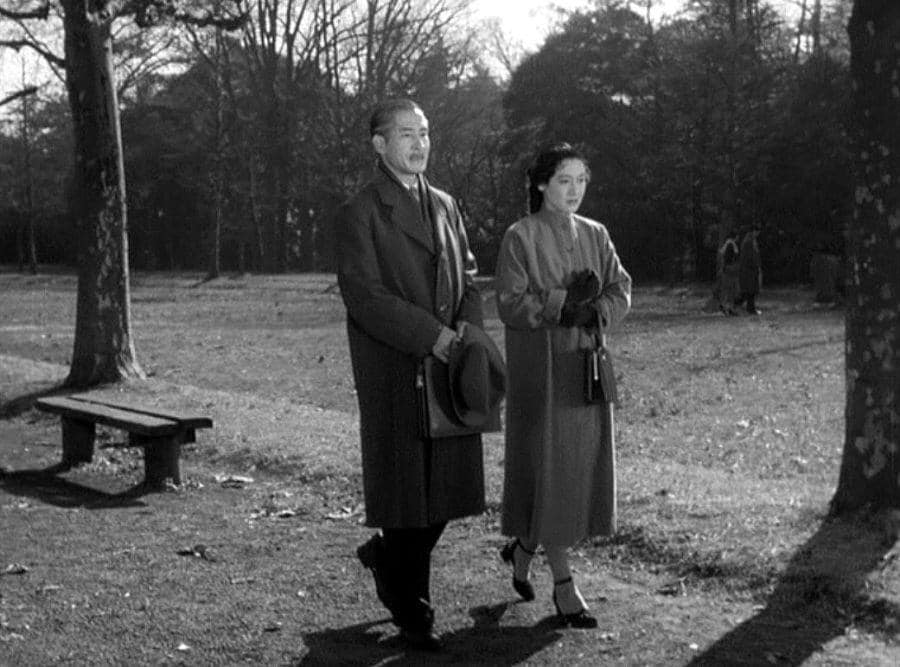
L’avventura by Michelangelo Antonioni (1960)
A ruthless study in how humans commit the same mistake over and over again.
Ugetsu by Kenji Mizoguchi (1953)
A fleeting and distracting dream that draws the protagonist away from what really matters.
Dust in the wind by Hou Hsiao-Hsien (1986)
Under the big sky, everything shall passes.
Paths of Glory by Stanley Kubrick (1957)
Leading with integrity - a trait I deeply admire.